
Grocery inflation is back up to 2.5%: what that adds to a weekly shop, and why the supermarket you use matters more
Supermarket prices were 2.5% higher than a year earlier in the four weeks to 4 October, up from 2.3% the month before, according to Worldpanel by Numerator (the panel formerly known as Kantar). On the government's own average spend that is about 84p a person a week, or £3.36 for a family of four. That is real money, but it is small next to the gap between supermarkets: Which?'s September basket cost £159.48 at Aldi and £193.45 at Tesco without a Clubcard.
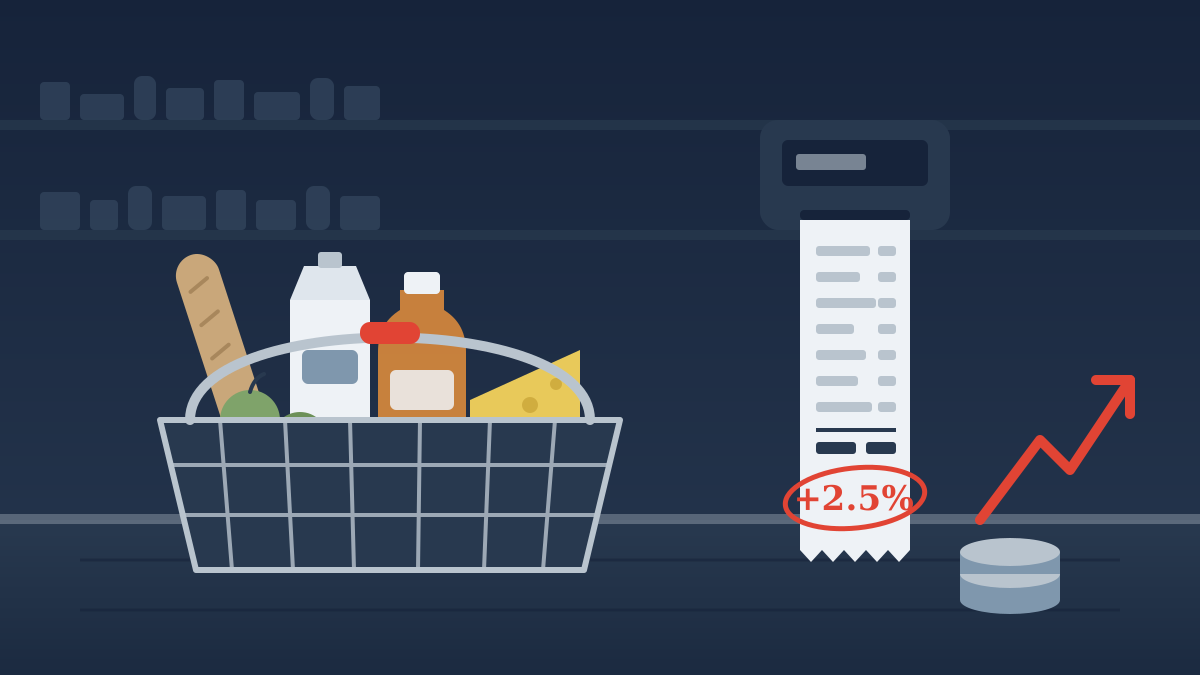
Grocery inflation, October 2026: the numbers that reach your till
| Figure | Value | What it means |
|---|---|---|
| Grocery price inflation (Worldpanel) | 2.5% | Like-for-like, four weeks to 4 October 2026, up from 2.3% in the four weeks to 6 September. Released 13 October 2026; reported by Reuters, the Evening Standard and Retail Times. |
| Official food inflation (ONS CPI) | 1.3% | Food and non-alcoholic beverages, 12 months to August 2026, unchanged from July (ONS, 16 September 2026). A different measure from Worldpanel's; September's figure is due 21 October. |
| What 2.5% adds: one person | About 84p a week, £43.72 a year | Our sum. £33.63 a person a week on household food and non-alcoholic drink (Defra Family Food, FYE 2025) × 2.5%. |
| What 2.5% adds: two adults | About £1.68 a week, £87.44 a year | Our sum. £67.26 a week × 2.5%. |
| What 2.5% adds: family of four | About £3.36 a week, £174.88 a year | Our sum. £134.52 a week × 2.5%. Assumes the Defra per-person average applies to every member, which overstates a household with small children. |
| Prices rising fastest | Water, cordials, skincare | Worldpanel, as reported by Reuters, 13 October 2026. |
| Prices falling fastest | Butter, cheese, chocolate | Worldpanel via Reuters. Like-for-like chocolate confectionery is 3% cheaper than a year ago (Worldpanel's Fraser McKevitt, quoted by the Evening Standard and Retail Times). |
| Extra spent on promotions | More than £250m | Over the four weeks, against the same period last year (Worldpanel, via the Evening Standard). No share-of-spend percentage was published in any report we could read. |
| Cheapest supermarket, September | Aldi, £159.48 | Which? 93-item basket. Lidl £161.84 (£161.48 with Lidl Plus), Asda £186.71, Morrisons £193.13 (£192.93 with More Card), Tesco £193.45 (£187.71 with Clubcard), Sainsbury's £195.01 (£188.95 with Nectar), Ocado £208.64, Waitrose £223.38. Published 5 October 2026. |
| Gap, Tesco with Clubcard to Aldi | £28.23, about 15% | Our sum on the Which? September basket: £187.71 − £159.48. Six times the 2.5% rise. |
| What a loyalty card took off, September | Sainsbury's 3.11%, Tesco 2.97% | Average saving from member prices in the Which? basket. Lidl Plus 0.22%, Morrisons More Card 0.1%. |
| Lidl, 12 weeks to 4 October | 8.6% share, sales up 7.1% | Up from 8.2% a year earlier, the biggest share gain in the market (Worldpanel via Reuters). The September release had Lidl at 8.7%. |
What happened
Grocery prices are rising a little faster again. Worldpanel by Numerator, the shopper panel that used to trade as Kantar Worldpanel, said on 13 October 2026 that like-for-like grocery price inflation was 2.5% in the four weeks to 4 October. That is up from 2.3% in its previous report, which covered the four weeks to 6 September, and up from 2.1% in August.
Total take-home grocery sales rose 1.0% year on year over the same four weeks. With prices up 2.5%, that means people bought less in volume, a point Reuters made in its report of the figures. Fraser McKevitt, Worldpanel's head of retail and consumer insight, said "the cost of living continues to weigh heavily on the minds of shoppers", and that "more than half tell us they're very or extremely worried about petrol prices". With the Budget still to come, he added: "Until the Chancellor sets out his plans, we expect that caution to carry on showing up at the till."
We could not read Worldpanel's own release for this period. Its insights page, which carries the September release, had not posted the October one when we checked, and we could not open the Guardian's report. The figures here come from Reuters (via Global Banking & Finance and ESM Magazine), the Evening Standard's report on AOL, and Retail Times, which agree with each other on every number we have used.
What 2.5% does to a real shop
A percentage is hard to feel, so here is our working. Defra's Family Food survey for the year to March 2025, published on 17 September 2026, puts average spending on household food and non-alcoholic drink at £33.63 a person a week. That excludes eating out and alcohol, which is the right comparison for a supermarket shop.
Apply 2.5% to that and you get the following. These are our sums, not Worldpanel's:
- One person: £33.63 × 2.5% = about 84p a week, or £43.72 over a year.
- Two adults: £67.26 × 2.5% = about £1.68 a week, or £87.44 a year.
- Family of four: £134.52 × 2.5% = about £3.36 a week, or £174.88 a year.
Two health warnings. The family-of-four figure assumes every person eats the adult average, which overstates a household with young children. And 2.5% is an average across everything Worldpanel tracks; your own rise depends on what is in your trolley, because some aisles are going up much faster than others and some are going down.
What is going up and what is coming down
Reuters reported Worldpanel's fastest price rises as water, cordials and skincare, and the steepest falls as butter, cheese and chocolate. McKevitt put a number on the chocolate: like-for-like chocolate confectionery prices are 3% lower than a year ago. "After the double digit increases of 2025," he said, "a 3% drop won't fully reverse what consumers have paid in recent months."
The official figures point the same way on chocolate. The ONS said the annual rate for sugar, jam, syrups, chocolate and confectionery fell to 0.6% in August from 2.5% in July, with "much of the longer-term easing" down to chocolate. It also said meat prices fell slightly in August, while vegetables rose by more than a year earlier.
The rest of Worldpanel's October story is about what people bought rather than what it cost: 1.2 million households bought a pumpkin in the four weeks, 10% more than a year earlier, and more than 250,000 bought pumpkin spice coffee. Those are demand figures, not price rises.
Why the official figure is lower
If 2.5% sounds high next to what you heard about official inflation, that is because they are different measures. The ONS consumer prices index put food and non-alcoholic beverages at 1.3% in the 12 months to August 2026, unchanged from July, while headline CPI was 3.1%. Worldpanel measures what its panel of households actually pays at the till across groceries, which includes things the ONS food line does not, such as skincare. The BRC-NIQ shop price index, which we covered when it hit a two-year high, had food at 2.8% in August. Three bodies, three baskets, three numbers. The ONS publishes September's figure on 21 October.
Shoppers are leaning on deals
Worldpanel said spending on promoted products rose by more than £250m over the four weeks compared with the same period last year. In September it said deal spending was up £243m, or 7.0%, while full-price sales grew only 1.4%. In other words, most of the growth in what people spend is going through promotions. Neither release, as reported, gave the share of all grocery spending that went on offers, so we cannot tell you that figure.
The gap between supermarkets is far bigger than the rise
This is the part that matters for your own shop. Which? prices a basket of 93 branded and own-brand items at eight supermarkets every month. For September, published on 5 October, it found:
- Aldi £159.48
- Lidl £161.84, or £161.48 with Lidl Plus
- Asda £186.71
- Morrisons £193.13, or £192.93 with a More Card
- Tesco £193.45, or £187.71 with Clubcard
- Sainsbury's £195.01, or £188.95 with Nectar
- Ocado £208.64
- Waitrose £223.38
On that basket, a Tesco shopper using Clubcard paid £28.23 more than an Aldi shopper, about 15%. That is six times the 2.5% that grocery prices rose in a year. The loyalty cards matter too: Which? found member prices took an average 3.11% off at Sainsbury's and 2.97% at Tesco, more than a year's worth of inflation, but only 0.22% at Lidl and 0.1% at Morrisons. Which? includes special offers in its basket but leaves out multibuys, personalised coupons and points, and it does not publish its product list.
Lidl is where the switchers are going
Lidl's share of the market rose to 8.6% over the 12 weeks to 4 October, from 8.2% a year earlier, with sales up 7.1% — the biggest share gain of any grocer, according to Worldpanel. Retail Gazette and Grocery Gazette reported on 12 October that Lidl took more than £650m in sales from shoppers switching from rivals. That figure comes from Lidl's own annual results for the year to February 2026, as reported by the Telegraph on 5 October, not from this month's Worldpanel data. Lidl has since said it will put £400m into prices ahead of Christmas.
Aldi, which Which? named cheapest, held a 10.5% share with sales up only 0.4%. Tesco stayed the largest grocer at 27.8% with sales up 1.0%, and Ocado was again the fastest-growing supermarket, sales up 12.4%. M&S, which Worldpanel does not fully capture, grew grocery sales 14.9%.
Reuters also reported that industry groups expect UK food inflation of nearly 7% in 2027, citing disruption in the Middle East, rising input costs and El Niño weather. We could not find which groups made that forecast, so treat it as a warning rather than a number to plan around.
How it unfolded
| Date | What happened |
|---|---|
| May 2026 | Lidl overtakes Morrisons to become Britain's fifth-largest grocer, on an 8.7% share (as reported by Grocery Gazette). |
| 20 August 2026 | Worldpanel reports grocery inflation slowing to 2.1%. |
| 15 September 2026 | Worldpanel: inflation 2.3% in the four weeks to 6 September; spending on deals up £243m, or 7.0%, while full-price sales grew 1.4%. |
| 16 September 2026 | ONS: CPI 3.1% in August; food and non-alcoholic beverages 1.3%, unchanged. |
| 17 September 2026 | Defra Family Food FYE 2025: £33.63 a person a week on household food and non-alcoholic drink. |
| 5 October 2026 | Which?: Aldi cheapest supermarket for September at £159.48. Telegraph: Lidl says £650m of its sales came from shoppers switching from rivals in the year to February. |
| 7 October 2026 | Lidl announces a £400m investment in prices ahead of Christmas. |
| 13 October 2026 | Worldpanel: grocery inflation 2.5% in the four weeks to 4 October; promotional spending up more than £250m. |
| 21 October 2026 | ONS publishes September CPI, including the official food figure. |
What this means if you shop there
- Put a pound figure on it before you worry. On the government's average of £33.63 a person a week, 2.5% is about 84p a person, £1.68 for two adults and £3.36 for a family of four. Those are our sums; your own rise depends on what you buy.
- If you shop at Tesco or Sainsbury's, scan the card every time. In Which?'s September basket, member prices took 2.97% off at Tesco and 3.11% at Sainsbury's. That alone is more than the year's 2.5% rise. At Lidl and Morrisons the card made almost no difference to the basket price.
- Switching is worth far more than dodging inflation. The same 93 items cost £159.48 at Aldi and £187.71 at Tesco with Clubcard, a gap of about 15%. Even if your own saving were half that, it would cover the rise several times over. Which? does not publish its list, and an Aldi or Lidl range is smaller, so test it with one shop before moving everything.
- Aldi and Lidl are only £2 apart. £159.48 against £161.48 with Lidl Plus. Pick whichever is nearer; the extra drive will cost more than the difference.
- Lean on what is falling. Butter, cheese and chocolate are where Worldpanel sees prices coming down, with chocolate confectionery 3% cheaper than a year ago. Water, cordials and skincare are rising fastest, so those are the lines to buy on offer or own-brand.
- Check that an offer is an offer. Shoppers spent more than £250m extra on promotions in four weeks. Compare the unit price on the shelf label, not the headline price, and remember Which?'s basket ignores multibuys because "buy two" only saves money if you would have bought two.
- Do not budget for the 7% headline yet. That 2027 forecast was reported by Reuters from unnamed industry groups. The next hard number is the ONS food figure on 21 October, and Worldpanel's next release in November.
Checked on 13 October 2026. A story this recent moves — we update this box rather than leaving it to rot.
Where this came from
- Reuters, via Global Banking & Finance Grocery inflation 2.5% in the four weeks to 4 October, up from 2.3%; sales up 1.0%; fastest rises water, cordials, skincare; falls butter, cheese, chocolate; the full market share table; the near-7% 2027 forecast · 13 October 2026
- Evening Standard, via AOL Prices 2.5% higher than last year, more than £250m extra on promotions, chocolate confectionery 3% cheaper, pumpkins, the Lidl, Ocado and M&S figures and the Fraser McKevitt quotes · 13 October 2026
- Retail Times Worldpanel release write-up: the 2.3% prior figure, retailer shares and growth, and McKevitt on chocolate, petrol and the Budget · 13 October 2026
- ESM Magazine Reuters figures confirming 2.5% and the categories, Tesco’s fifth consecutive share fall, and the 21 October ONS date · 13 October 2026
- Worldpanel by Numerator — September release Inflation 2.3% in the four weeks to 6 September, deal spending up £243m or 7.0% against full-price sales up 1.4%, and the September market shares including Lidl at 8.7% · 15 September 2026
- ONS — Consumer price inflation, August 2026 CPI 3.1%; food and non-alcoholic beverages 1.3%, unchanged; chocolate and confectionery class down to 0.6%; meat down, vegetables up; next release 21 October · 16 September 2026
- Defra — Family Food FYE 2025 £33.63 a person a week on household food and non-alcoholic drink, the basis of our pound sums · 17 September 2026 (corrected 18 September)
- Which? — cheapest supermarket of the month September 2026 93-item basket totals at eight supermarkets, with and without loyalty prices, the average loyalty saving at each and the method · 5 October 2026
- Grocery Gazette Lidl gains £650m from shoppers switching, 43 million extra customer visits, 486 million more products sold, and the 8.7% share in May · 12 October 2026
- The Telegraph, via Yahoo Finance The £650m switching figure as Lidl’s own, for the year to February, and Ryan McDonnell on own-label pricing · 5 October 2026
- Grocery Gazette Lidl’s £400m price investment ahead of Christmas and the 23% rise in Lidl Plus users · 7 October 2026
- The Guardian UK shoppers seek deals as grocery price inflation rises again. Could not be opened; its figures reached us second-hand through UA.News and matched the reports above · 13 October 2026
What we could not check
- Worldpanel by Numerator's own October release. Its insights listing carried the 15 September release but not this one when we checked on 13 October, so every October figure here is as reported by Reuters, the Evening Standard and Retail Times.
- The Guardian's report, which we could not open. We saw its figures only through a UA.News summary.
- The share of grocery spending that went on promotions. No report we read gave a percentage, only the £250m-plus rise in promotional spending.
- The size of the price rises and falls in each category. Reuters named water, cordials and skincare as rising fastest and butter, cheese and chocolate as falling, but gave no percentages except chocolate confectionery at minus 3%.
- Our pound sums use Defra's £33.63 a person a week for the year to March 2025, the latest published. Spending has moved since, and the family-of-four figure assumes every person eats the adult average.
- Which? does not publish the 93 items in its basket, so we cannot say how close it is to a typical weekly shop or whether every item is available at Aldi and Lidl.
- The £650m Lidl switching figure is Lidl's own, from its results for the year to February 2026, as reported by the Telegraph. We could not open Retail Gazette's 12 October report, and no independent measure of switching was published with this month's Worldpanel data.
- Lidl's extra customer visits: the Telegraph's body text says 43 million, its photo caption "more than 40 million".
- Lidl's market share was 8.6% in the 12 weeks to 4 October but 8.7% in the 12 weeks to 6 September, so it rose year on year but slipped from the previous release. Aldi went from 10.6% to 10.5% over the same step.
- Which industry groups forecast "nearly 7%" food inflation in 2027. Reuters did not name them in the version we read.
- What the £400m Lidl price investment actually cuts. Grocery Gazette did not itemise products or categories.
Company figures are as reported by the businesses themselves or their administrators. Where two sources disagree, this page says so rather than picking one.